How to Perform Self-Lymphatic Drainage Massage: A Step-by-Step Guide
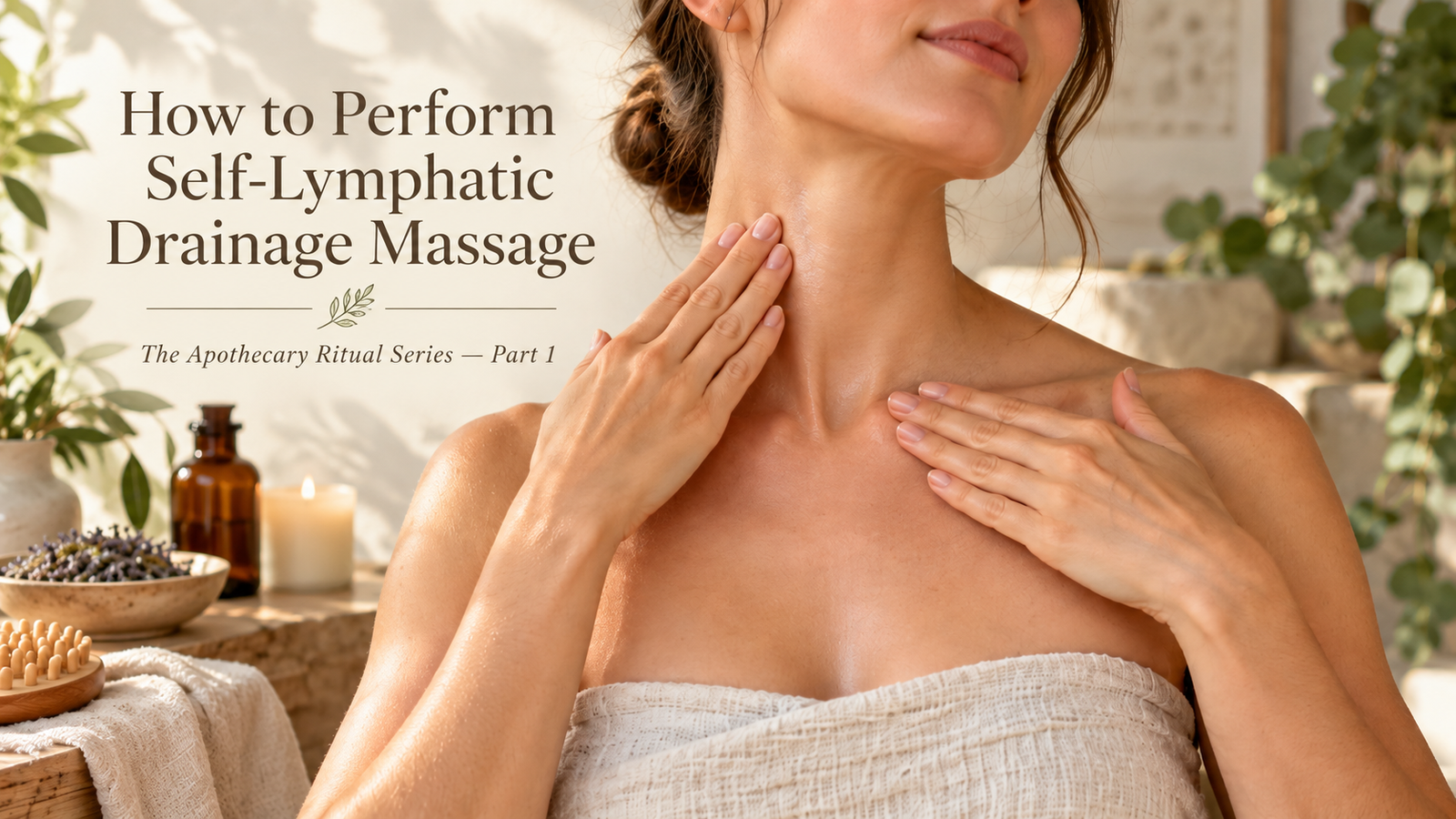
How to Perform Self-Lymphatic Drainage Massage: A Step-by-Step Guide
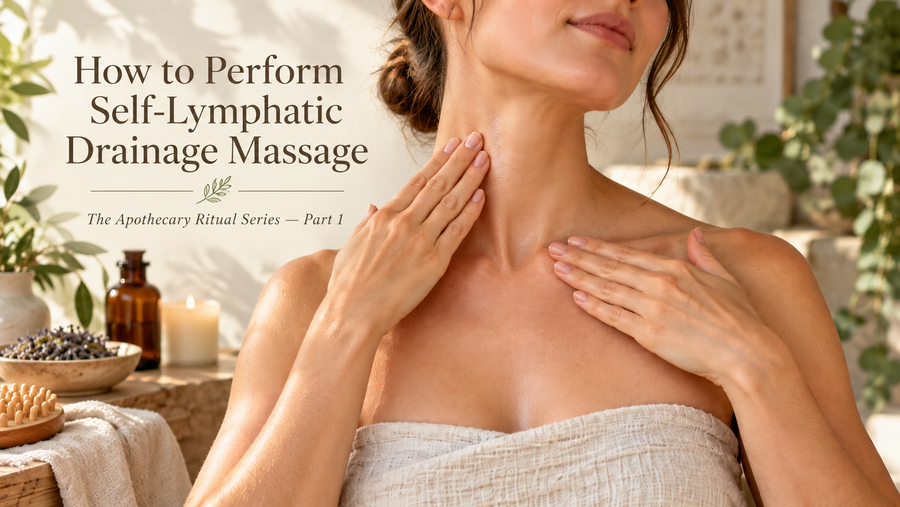
The Apothecary Ritual Series — Part 1
Welcome to The Apothecary Ritual Series by Natalie’s Naturals Apothecary, where we explore traditional and modern self-care practices with an emphasis on gentle techniques, botanical wellness and intentional daily rituals.
In Part 1, we're exploring one of the most misunderstood body-care practices: self-lymphatic drainage massage.
Unlike traditional massage, lymphatic drainage is not about kneading sore muscles or applying deep pressure.
The movements are intentionally slow, rhythmic and remarkably gentle.
Understanding that difference is the foundation of practicing it correctly.
What Is the Lymphatic System?
Your lymphatic system is part of your immune and circulatory systems.
A network of lymph vessels, lymph nodes and organs helps move lymphatic fluid throughout the body and ultimately return fluid to your circulation.
Groups of lymph nodes are found throughout the body, including around the:
-
Neck and collarbones
-
Armpits
-
Abdomen
-
Groin
Movement, breathing and normal muscle activity all contribute to lymphatic circulation.
Manual lymphatic drainage, commonly called MLD, is a specialized massage technique designed to gently stretch the skin and encourage superficial lymphatic movement.
Clinical MLD used for diagnosed lymphedema should be performed or taught by a qualified professional such as a Certified Lymphedema Therapist (CLT).
This article is intended as a general wellness guide for gentle self-massage and is not a substitute for individualized lymphedema treatment.
The Most Important Rule: Use Very Light Pressure
If you're accustomed to deep tissue massage, lymphatic massage can initially feel almost too gentle.
That's intentional.
Many lymph vessels are located close to the surface of the skin.
Instead of pressing deeply into muscle, think about gently stretching the skin and allowing it to return.
The movement should feel:
Gentle.
Slow.
Rhythmic.
Comfortable.
Pain-free.
Your skin should not become intensely red, sore or bruised.
More pressure does not mean more effective lymphatic massage.
Understanding the Basic Sequence
For a general wellness routine, begin closer to the central lymphatic regions before moving farther away.
A simplified sequence looks like:
Breathing → Collarbone → Neck → Armpits → Abdomen/Groin → Arms or Legs → Finish Centrally
People who have had lymph nodes removed, radiation therapy, cancer treatment or diagnosed lymphedema may require completely different drainage pathways.
If that applies to you, follow the route provided by your healthcare professional or Certified Lymphedema Therapist instead of a general online routine.
Step 1: Begin With Diaphragmatic Breathing
Get comfortable sitting or lying down.
Place one hand over your upper chest and one over your abdomen.
Slowly breathe in through your nose and allow your abdomen to expand.
Then exhale slowly and allow your abdomen to soften.
Repeat approximately five slow breaths.
Try to keep your shoulders relaxed.
Diaphragmatic breathing creates natural pressure changes through the chest and abdomen and is commonly incorporated into lymphatic self-care routines.
Step 2: Begin at the Collarbone Area
Place your fingertips gently just above your collarbones.
Without sliding aggressively over the skin, lightly stretch the skin downward and slightly inward.
Release.
Repeat approximately 5 to 10 times.
Think:
Stretch → Release → Stretch → Release
The movement should be slow rather than rapid.
Step 3: Gently Massage the Neck
Place the pads of your fingers below and slightly behind your ears.
Using extremely light pressure, gently stretch the skin downward along the sides of the neck toward the collarbones.
Repeat the movement several times while gradually working lower.
Finish with several gentle movements above the collarbones again.
Avoid pressing directly into the front of your throat.
Step 4: Prepare the Armpit Area
Place your opposite hand gently against the skin near the armpit.
Use a soft pumping or circular skin-stretching movement.
Avoid digging deeply into the armpit.
Repeat approximately 5 to 10 gentle movements, then switch sides.
This area is commonly addressed before performing self-massage on the arms.
Step 5: Facial Lymphatic Massage
Before beginning the face, first complete your collarbone and neck movements.
Forehead
Place your fingertips near the center of your forehead.
Slowly glide or gently stretch outward toward your temples.
Repeat several times.
Under the Eyes
Use your ring fingers or very light fingertips.
Begin near the sides of the nose and move gently outward across the upper cheeks toward the ears.
The under-eye area requires exceptionally light pressure.
Never aggressively pull or scrape this delicate skin.
Cheeks
Begin closer to the center of your face and gently move outward toward the ears.
Jawline
Begin near the center of your chin.
Move outward along your jaw toward the ears.
After finishing around the face, gently move from the area near the ears down the sides of the neck toward the collarbone region.
Step 6: Self-Massage for the Arms
Prepare the armpit area first.
Then begin higher on the arm before gradually working farther down.
Start with the upper arm and gently stretch the skin toward the armpit.
Next work around the elbow toward the upper arm.
Then move from the forearm toward the elbow.
Finally, move from the wrist toward the forearm.
Finish with a few slow movements along the arm toward the armpit.
Avoid tightly squeezing, kneading or forcefully rubbing your arm.
Step 7: Gentle Abdominal Massage
Lie comfortably or sit in a supported position.
Place the flat portion of your hands lightly over your abdomen.
Begin with another few diaphragmatic breaths.
Make slow, comfortable circular movements over the abdomen.
Keep your pressure gentle.
Avoid deep abdominal pressure, especially if you have abdominal pain, a recent procedure, pregnancy-related concerns or another medical condition affecting the abdomen.
Step 8: Prepare the Groin Area
Place your hands gently where the upper thigh meets the pelvis.
Use very light skin-stretching movements toward the upper inner thigh and groin region.
Repeat several times on each side.
Avoid deep pressure.
Step 9: Gentle Leg Massage
Begin closer to the upper thigh before starting at the foot.
Start by gently working from the upper thigh toward the groin.
Next work from around the knee toward the upper thigh.
Then move from the lower leg toward the knee.
Finally, begin near the ankle and work gradually upward.
A simple sequence is:
Upper thigh → Knee → Lower leg → Ankle
while directing each section gently upward toward the previously prepared area.
Finish with several light movements toward the upper thigh and groin.
How Long Should a Self-Massage Routine Take?
A gentle general wellness routine may take approximately 5 to 15 minutes.
There is no need to rush.
Slow, intentional movement is more appropriate than aggressive or repetitive rubbing.
People using self-MLD as part of actual lymphedema treatment may have a longer and much more individualized routine.
Should You Use Oil?
Traditional lymphatic drainage techniques generally rely on enough contact with the skin to gently stretch it.
Using too much oil may make the skin too slippery.
If you prefer using a small amount of skincare product during a relaxing wellness massage, choose enough to prevent uncomfortable friction without completely eliminating your ability to lightly move the skin.
What Lymphatic Massage Should NOT Feel Like
Self-lymphatic massage should not involve:
Deep pressure.
Aggressive kneading.
Painful scraping.
Hard squeezing.
Bruising.
Forceful pressure over swollen or tender areas.
Gentler is better.
When You Should NOT Perform Self-Lymphatic Massage
Do not attempt to treat unexplained swelling yourself.
Speak with a healthcare professional before lymphatic massage if you have or suspect:
A blood clot or deep-vein thrombosis.
Cellulitis or another active infection.
Fever.
Sudden unexplained swelling.
Significant heart or kidney disease.
Recent surgery without medical clearance.
A history of lymph-node removal or radiation therapy.
Diagnosed lymphedema without individualized instruction.
New warmth, redness or severe tenderness.
Seek urgent medical attention for sudden one-sided swelling, chest pain, unexplained shortness of breath or rapidly worsening symptoms.
A Gentle Ritual, Not a Forceful Massage
The most important lesson in lymphatic self-massage is simple:
Slow down. Lighten your touch. Work intentionally.
This is not a “no pain, no gain” technique.
Your touch should feel soothing and gentle from beginning to end.
Continue The Apothecary Ritual Series
Part 2: How to Dry Brush Your Body Properly
Learn how to incorporate dry brushing into your body-care routine without over-exfoliating your skin.
Part 3: How to Use a Gua Sha Stone Properly
Learn gentle facial gua sha techniques for a relaxing skincare and massage ritual.
From the Apothecary
Pair your self-care ritual with simple, nourishing botanical body products designed to make slowing down and caring for your skin feel intentional.
Explore Natalie’s Naturals Apothecary →
Educational Disclaimer: This article is provided for general wellness education only and is not intended to diagnose, treat, cure or prevent any medical condition. Manual lymphatic drainage used to manage lymphedema is a specialized therapeutic technique. Consult an appropriate healthcare professional or Certified Lymphedema Therapist if you have lymphedema, unexplained swelling, lymph-node removal, cancer treatment history or significant medical conditions.